HOMA-IR is one of the most revealing numbers your doctor probably never ordered — and it could be the difference between catching a metabolic problem years early or discovering it as a full-blown crisis.
If your blood glucose test came back “normal,” you may have walked out of your doctor’s office with a clean bill of health — and a slow metabolic problem brewing beneath the surface.
That is not an exaggeration. It is how insulin resistance works. For years, sometimes decades, your blood sugar can look perfectly fine on standard labs, even as your pancreas works overtime to keep it there. By the time glucose numbers rise, you have already lost significant metabolic ground.
HOMA-IR is the test that sees what your routine labs miss.
What is HOMA-IR?
HOMA-IR stands for Homeostatic Model Assessment of Insulin Resistance. It is a calculated value derived from two simple fasting lab values you may already have on file: your fasting insulin level and your fasting glucose level.

The formula was developed in 1985 as a way to estimate two things at once: how insulin-resistant your cells have become, and how well your pancreas is still functioning. It remains one of the most validated, cost-effective metabolic markers in clinical research.
The key insight: a healthy person needs very little insulin to manage blood sugar. An insulin-resistant person requires increasingly large amounts of insulin to do the same job — and their fasting insulin reflects that burden, even when glucose looks normal.
What the numbers mean
At 4Core, we do not use “within reference range” as our standard. We use optimal ranges — the values linked to the lowest disease risk and highest long-term function.

Many conventional labs consider anything below 2.5 or even 3.0 as “normal.” At 4Core, we consider that threshold far too permissive for a population we are trying to keep healthy — not simply keep out of a disease diagnosis.
Insulin resistance: the root of many chronic conditions
High HOMA-IR does not just predict pre-diabetes. It is connected to a wide range of conditions that are among the most common — and most preventable — chronic diseases today.
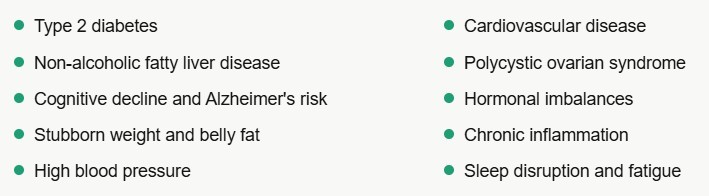
HOMA-IR matters most because of timing. Most of these conditions take 10 to 20 years to develop from the first signs of insulin resistance. That means an elevated HOMA-IR in your 40s is not a prediction of your future — it is a chance to change it.
The 4Core perspective
Most people who come to us with fatigue, brain fog, stubborn weight, or hormone imbalances have had their glucose checked a dozen times and been told everything is fine. When we add fasting insulin to the picture, the story changes dramatically. HOMA-IR is one of the first windows we look through.
Why HOMA-IR catches problems years before A1C does
Your doctor probably checks your A1C every year. It measures your average blood sugar over the past two to three months. It is useful for tracking diabetes — but it has a major blind spot when it comes to catching problems early.
Here is the difference in simple terms: A1C tells you what has already happened to your blood sugar. HOMA-IR tells you what your body is doing right now to keep blood sugar in check.

The problem with relying on A1C alone is that blood sugar stays normal for a long time even as insulin resistance grows. Your pancreas compensates by producing more and more insulin. HOMA-IR detects that compensation. A1C does not — not until the pancreas starts to fail and glucose finally climbs. By that point, the window for easy, lifestyle-based reversal has narrowed significantly.
How the progression works: The timeline A1C misses
Years 1 to 5
Cells begin resisting insulin. The pancreas compensates by producing more. Blood sugar stays normal. A1C looks fine. HOMA-IR begins to rise.
Years 5 to 15
Insulin resistance deepens. The pancreas works harder. Fasting insulin climbs. HOMA-IR moves into the concerning range. A1C may still read normal.
Year 15 and beyond
The pancreas can no longer keep up. Blood sugar begins to rise. A1C enters the pre-diabetes range. Conventional medicine finally flags the problem — years after it started.
More than 115 million American adults have pre-diabetes. About 8 in 10 of them do not know it. HOMA-IR is one of the few tools that can identify the problem while there is still time to reverse course.
An important note
HOMA-IR and A1C are not competing tests — they are partners. HOMA-IR is most useful in the early and middle stages of insulin resistance. A1C becomes more important later, when the focus shifts to monitoring blood sugar control. At 4Core, we use both together to get the full picture.
The lifestyle factors your cells are keeping score on
Insulin resistance builds up over years in response to repeated metabolic stress. The biggest contributors include excess refined carbohydrates and added sugars, visceral fat stored around the organs, chronic poor sleep, a sedentary lifestyle, and ongoing stress that keeps cortisol elevated.
Skeletal muscle is the largest site of glucose use in the body. When we stop using it, insulin sensitivity drops fast. Regular resistance training and even short walks after meals can move HOMA-IR in the right direction within weeks.
HOMA-IR is highly reversible
This is the most important message: insulin resistance is not permanent. It responds to lifestyle changes faster than almost any other metabolic condition. Research consistently shows that targeted changes can reduce HOMA-IR significantly within 8 to 12 weeks.
The functional medicine approach does not hand you a pamphlet. It finds your specific drivers — whether that is nutrition, sleep, stress, or hormones — and builds a plan around them. That is what we do at 4Core.
Bottom Line: The number your annual physical skips over
Standard medicine checks fasting glucose and A1C. It almost never checks fasting insulin. That gap means millions of people are walking around with early-stage insulin resistance — generating symptoms, accumulating risk, and receiving no warning that anything is wrong. And here is the potential out of pocket cost of that over time.
HOMA-IR closes that gap. It is a simple, affordable calculation that gives you a years-early window into metabolic function that standard labs simply do not provide.
Age is inevitable. The metabolic decline most people assume comes with it is not.
Ready to see your full metabolic picture?
Discover what your routine labs have been missing. Our Functional Health Assessment includes HOMA-IR, full hormonal panels, resting metabolic rate testing, bodyscan composition analysis, 70+ biomarkers and a review with our clinical team — all for just $375 (HSA/FSA Eligible and easy payment plans available).
Book A Free Initial Health Check Call
This article was originally published on the 4Core Substack.


